


Philips $1.1 Billion CPAP Settlement Reaches Its Final Payout Phase
The $1.1 billion settlement over recalled Philips Respironics sleep apnea machines moved into its final distribution phase in January 2026. Roughly 59,000 claims have been filed by people who say the degrading sound-abatement foam in those devices injured them, and payments are going out on a rolling basis as liens clear.
What the settlement resolves
Philips Respironics agreed in April 2024 to pay $1.1 billion to resolve personal injury claims arising from its 2021 recall of CPAP, BiPAP and mechanical ventilator devices. Of that, $1.075 billion funds the personal injury claims and $25 million funds a medical monitoring program for people who used a recalled device and may develop problems later. A master settlement agreement followed in May 2024, covering United States citizens and residents with a qualifying injury from a recalled product.
The litigation is consolidated as MDL 3014 before Judge Joy Flowers Conti in the U.S. District Court for the Western District of Pennsylvania, with BrownGreer PLC appointed by the court as settlement administrator. Roughly 59,000 claims have been filed into the program.
The defect: what the foam actually did
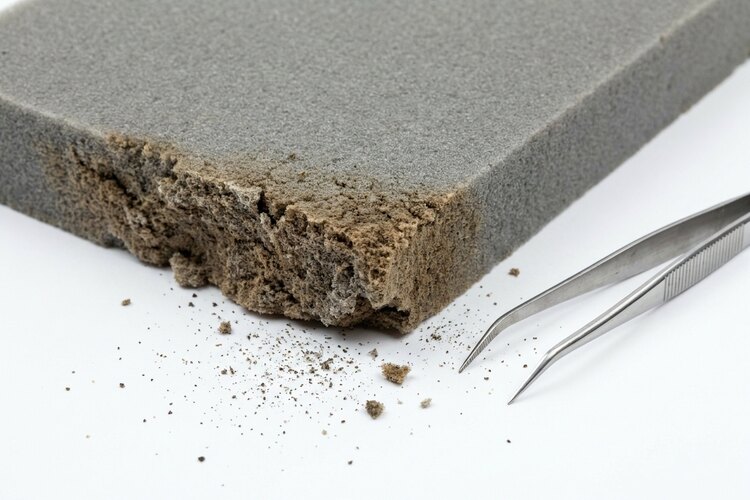
The devices used a polyester-based polyurethane foam — PE-PUR — as a sound abatement layer, to keep the motor quiet enough to sleep beside. That foam can degrade. When it does, two separate things can happen, and the distinction matters for how injury claims are pleaded.
First, the foam can break apart physically, shedding black particles into the air path where a user breathes them in or swallows them. Second, it can off-gas volatile organic compounds that are invisible and have no obvious taste or smell. Degradation is accelerated by heat and humidity — ordinary bedroom conditions in much of the country — and by ozone-based cleaning devices sold as CPAP sanitisers, which were widely marketed and are not recommended by the manufacturer.
The exposure pattern is what makes these claims unusual. A CPAP user breathes through the machine for six to eight hours a night, every night, often for years, with the mask sealed to their face. There is no comparable device where a defect in a sound-damping component delivers a continuous inhaled dose over that kind of span.
How the recall unfolded
Philips initiated the recall on June 14, 2021. It reached roughly 15 million devices worldwide, making it one of the largest medical device recalls on record, and it left a very large number of people with sleep apnea choosing between a device under recall and no therapy at all. The FDA and the American Academy of Sleep Medicine both issued guidance during that period telling patients not to stop treatment without talking to their clinician, because untreated sleep apnea carries its own cardiovascular risk.
The company and the FDA did not agree about severity. Philips’s own testing concluded that emissions from the foam fell within safety thresholds; the FDA published its own summary of the foam testing and pressed on the completeness of that analysis. The disagreement matters because it is the factual core of the litigation, and it is why the settlement carries no finding on causation.
On April 9, 2024 — three weeks before the personal injury settlement was announced — a federal court entered a consent decree between the government and Philips Respironics, following an FDA inspection of a U.S. manufacturing facility. Under it, the company is barred from manufacturing and distributing new sleep apnea devices in the United States until it meets defined quality benchmarks. That is a regulatory outcome, not compensation, and it runs on its own track.
Where the payouts stand
The personal injury fund entered final distribution in January 2026 and has been paying claimants on a rolling basis rather than all at once. Claims are at different stages depending on when they were submitted and how complete the file is.
The bottleneck is liens. Before a settlement payment is released, any medical costs already paid by Medicare, Medicaid, the Veterans Health Administration or a private insurer have to be identified and satisfied out of the award. Medicare conditional payment clearance in particular has emerged as the main source of delay in this program, and it is largely outside a claimant’s control — it moves at the speed of the recovery contractor. A claimant told their claim is approved but not yet paid is usually waiting on that step.

How awards are calculated
The fund uses a points-based allocation rather than a flat per-person amount. Points reflect the severity of the claimed injury, the medical documentation supporting it, the length of device use and other case-specific factors, and the points determine the share of the fund a claim receives. The consequence is a wide spread of outcomes: a documented serious respiratory injury and a claim of transient irritation are not in the same bracket.
Reported ranges circulate widely and differ by source. None of them should be read as what an individual claim is worth, because allocation depends on what is actually in the file — device serial numbers and purchase records, the dates of use, the diagnosis and its timing relative to that use, treating physician records. The documentation is the valuation.
The other Philips settlements, which are not this one
Three separate resolutions came out of the same recall, and they are routinely confused:
- Economic loss — $479 million, agreed in September 2023, reimbursing people who paid for a recalled device. Per-person payments were reported in the range of $50 to $1,500. This is about the cost of the machine, not injury.
- Personal injury — the $1.075 billion fund described above, for people with a qualifying injury.
- Medical monitoring — $25 million, for surveillance of users who are not currently claiming an injury.
A person can fall into more than one of these categories. Receiving an economic loss payment years ago does not mean an injury claim was resolved.
What it means if you used a recalled device
The personal injury program is in its distribution phase, which means it is a claims administration process rather than an open invitation to file. Anyone with a pending claim should be asking their counsel where the file sits in the review queue, whether any lien is outstanding, and what documentation is still missing — that last question is the only one where a claimant can usually speed things up.
Background on the recall, the affected models and the litigation is on the DrugNews Philips CPAP lawsuit page, with the wider category on the medical devices page. For a sense of how these device cases tend to unfold, the surgical heater-cooler infection litigation followed a similar arc — a contamination mechanism inside a device nobody had thought of as a risk, consolidated into an MDL after the recall, and resolved years later. The recurring lesson from both, and from reporting on how device injuries get reported to regulators, is that the gap between when a problem is known internally and when patients hear about it is where most of the harm accumulates.
Sources
- FDA — Recalled Philips ventilators, BiPAP machines and CPAP machines
- FDA — Foam testing summary for the recalled Philips devices
- Philips Respironics Personal Injury Settlement — official program website
- Philips — explanation of the Respironics consent decree (April 2024)
- Philips — resolution of the U.S. economic loss litigation (September 2023)
- U.S. District Court, W.D. Pa. — MDL 3014 docket information
Other drugs and devices in the news:
Elmiron is a mild blood-thinner drug that has been around since 1996 and is prescribed to treat bladder pain or inflammation, a condition called interstitial cystitis.
Since many of the companies that sold asbestos or used it in their products have long since gone out of business, people who are diagnosed with asbestos-related cancers often think it’s too late to file a lawsuit.